Fixed Assets Accounting
When we refer to fixed assets, we are referring to longer-term assets. These are assets that will last more than one year. Fixed assets in accounting are commonly known as plant, property, and equipment.
There are several types of long-term assets. The term “plant” — also referred to as fixed assets — is sometimes grouped as property, plant, and equipment. A few different names exist for them. These assets are tangible in nature, which means we can physically use them. We can use equipment, a building, or any asset actively used in operations over a longer period of time. As a rule of thumb, their use is expected to benefit future accounting periods. Property, plant and equipment is also abbreviated to the acronym PPE (PP&E).
What is fixed asset depreciation
Recording Assets at Historical Cost
Plant assets pose a challenge, as we must accurately record their acquisition. Essentially, we buy them and then include them in our financial records. To do this correctly, we must consider the historical cost principle. This means we record assets at the price we paid — the original cost — regardless of their current market value. So no matter what we think we can sell an asset for today, we leave it at its original cost. That is how we acquire assets.
Spreading the Cost Over Time
We do not count an asset as an expense right away. Instead, as we use it over the next 10, 15, or 20 years, we spread that cost out. Moreover, we allocate that cost to the periods that benefit from it — this is known as depreciating the asset.
The idea is that the asset helps us generate revenue throughout its productive life. Therefore, we match current expenses with that revenue — this is the matching principle. In other words, we match the expense with the life of the asset and the revenue it helped generate over that life.
Subsequent Expenditures
Sometimes, after purchasing an asset, we need to repair or improve it. For example, we might need to overhaul the engine of a vehicle. Alternatively, if it is a building — say a hospital — we might need to add a brand new ward. In these cases, we must determine how to account for those subsequent expenditures. Do we add them to the asset’s cost because they genuinely add value? Or do we count them as an immediate expense against that year’s revenue? Both options exist, and the right choice depends on the nature of the expenditure.
Disposing of an Asset
At the end of an asset’s life, we must record its disposal and remove it from our books. We no longer own or use it. Perhaps we sold it, perhaps we donated it to a charity, or perhaps we simply abandoned it. Whatever the case, we need to get it off our books entirely.
Asset Acquisition and Purchase Cost
The Purchase Price as a Starting Point
The acquisition cost of an asset starts with the purchase price — the actual invoice cost. However, similar to inventory, the invoice price is not the whole story. Additional costs may include:
- Transport or freight costs to ship the asset to us
- Installation costs
- Calibration and testing fees
- Site preparation — for example, removing a wall to fit equipment into place
Basically, any expenditure needed to prepare the asset for its intended use forms part of the acquisition cost.
What Is Excluded from Acquisition Cost
Cash discounts are not included — since we did not pay that amount, it does not count as a cost. Furthermore, financing charges (interest on borrowed funds used to buy the asset) are also excluded from the acquisition cost.
Land and Building Assets
Land and building assets carry a variety of additional cost inclusions as part of the initial acquisition cost. These include taxes, surveying fees, stamp duty, real estate agent commissions, transfer fees, and title searches. Buildings are depreciable under Division 43 of the Income Tax Assessment Act (ITAA) 1997. Land, however, is not depreciable.
The reason is straightforward — depreciation reflects using up an asset over its life. Land does not have a specific useful life, as that land is going to be there forever. Land improvements such as buildings, carparks, driveways, fences, and lighting systems are all subject to asset depreciation.
Lump Sum Asset Purchases
This leads to an interesting discussion when you make a lump sum asset purchase — that is, when you purchase a number of assets for one combined price. For instance, say we bought a building, a piece of land, and some equipment, but paid one price for the whole lot.
For accounting purposes, we must allocate that total cost across each individual asset. We cannot record them as a single asset — firstly because land is not depreciable, and secondly because each asset will have a different effective life for depreciation purposes.
The solution is to obtain a professional appraisal that assigns a fair value to each asset within the total purchase price.
AssetAccountant – saving you from spreadsheets since 2019
Depreciation and an asset’s effective life
Matching Cost to Revenue
We have covered how to determine the purchase price and allocate acquisition costs. Now, how do we spread that cost over the rest of an asset’s effective life?
The key goal here is to best match the expense with revenue. Specifically, we want to make sure every year of an asset’s life carries a proportionate share of its cost. Depreciation is the process of allocating costs as expenses across the various accounting periods.
Book Value vs. Market Value
From an accounting perspective, depreciation does not necessarily reflect a decline in fair market value. Rather, it reflects the fact that we have used up — or allocated — some of that cost as an expense in the current year. As a result, it is about the decline in book value, not the fair market value. The two may be similar, but approximating market value is not the goal.
At the end of your use of the asset, you may sell it and make a gain or a loss. We start with the balance sheet, where the asset is recorded at its cost, and we allocate that cost out to the income statement as depreciation expense.
Calculating Depreciation
To calculate depreciation, you need to know the cost — which, as discussed, is straightforward to determine. You do not necessarily need to know the salvage value upfront. Instead, you can account for this at the end of the asset’s life when you dispose of or sell the asset, treating it as a writeback, profit, or loss at that time.
AssetAccountant fixed asset software can easily account for the taxable use allocated to the asset when you dispose of it.
In addition, you need an estimate of the asset’s useful life. In Australia, Taxation Ruling TR 2019/5 serves as the guide for effective lives across all classes of depreciable assets. The Commissioner of Taxation issues this annual ruling under s 40-100 of ITAA 1997. Furthermore, it contains new effective life determinations incorporated into Tables A and B in the Schedule to TR 2019/5.
Methods of Fixed Asset Depreciation
So with the above in mind, we need to determine the appropriate method of depreciation we use for an asset.
The two most common methods are Prime Cost (also known as Straight Line Depreciation Method) and Diminishing Value (DV). AssetAccountant fixed asset depreciation and lease accounting software accommodates these two and all other common methods of depreciation.
Prime Cost Method
If we concentrate on probably the most common and best known — the Prime Cost Method of asset depreciation — it means we will have the exact same amount of depreciation expense every year of the asset’s life. In other words, we split the cost evenly across all periods to calculate the depreciation expense for each period of the asset’s effective life.
Prime cost method of fixed assets accounting depreciation – Transcript
Getting Started in AssetAccountant
This is an example of prime cost method depreciation, otherwise known as straight line method depreciation. We are now inside the AssetAccountant application, which you can find at https://app.asset.accountant.
Once you have an account, assuming you’ve created one or you are a customer or you are trialling our fixed assets accounting software, you just input in your username and your password to sign in.
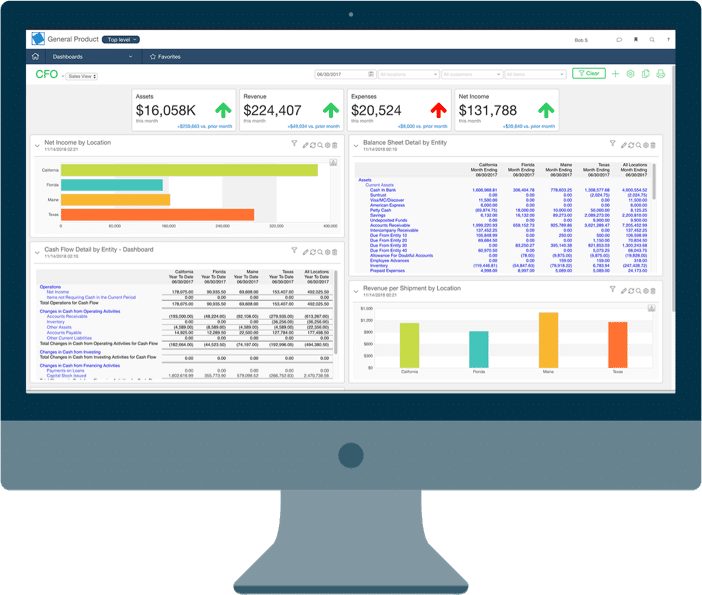
Once signed in, you’ll be greeted by the dashboard. This is a sample register I use for testing. You can see the name of the organisation and the name of the register.
You can toggle between tax view and accounts. You can also select which period you want to have the view in.
Configuring Asset Group Depreciation Settings
Asset groups is the next tab over and you’ll see furniture and fittings, computer equipment, just five of the standard ones for today’s exercise.
I’m going to choose furniture and fittings. And in here you’re able to allocate a name, a description, you can put in an initial purchase cost, a capital gains tax allowance, if you want that to be accounted for.
But most importantly here is the asset group depreciation settings.
Here is your method for tax depreciation and your method for accounts depreciation.
This determines what default settings will be made for new assets from this time on.
Of course these can be altered at the asset level.
Adding a New Asset
If you want to show an asset for accounts view, and one for tax view, that is entirely possible. I’m going to add a new asset. Let’s just call it a test asset.
We are able to put in serial numbers if we wish to do so. And I’m going to allocate this particular asset to furniture and fittings. Let’s say it’s $1,000. And our purchase date is the 1st of August.
Projecting Depreciation with Prime Cost Method
We can make a lot of choices here. You can choose separate values for tax depreciation and accounts depreciation. So I’m going to leave this just as the standard prime cost over 10 years for both accounts and tax, and I’m going to save this.
I’m just going to change our view to this financial year, and you’ll see it projects, the depreciation using the prime cost method over this time. We have our purchase value of a thousand dollars, which was on the 1st of August and what it does is it calculates the $100 per year (10% depreciation) and calculated as a daily value.
This daily value is multiplied by how many days in the month to give us our depreciation amounts for journal entries.