

For New Zealand organisations applying NZ IFRS 16, most leases are recognised on the statement of financial position through a ...
Choosing lease accounting software is not the same as understanding ASC 842. Most US finance teams and CPA firms reach ...
Spreadsheets can cope with a handful of simple leases. The trouble starts later — when a lease is modified, a ...
Finance teams increasingly find themselves handling two things that used to feel separate: the fixed assets a business owns, and ...
Xero launched Ultra in Australia on 7 July 2026. It is the company’s most advanced plan yet, built for businesses ...
If you are comparing fixed asset management vs fixed asset accounting, the terminology can make the buying decision harder than ...
Every Canadian business that owns capital assets eventually runs into the same problem: keeping asset records accurate enough for financial ...
CRA Capital Cost Allowance Calculator Compare standard CCA and AIIP side by side — modelled on the Income Tax Act ...
The New Zealand Investment Boost can put real money back into a business in the year it invests. However, the ...
Canada’s capital cost allowance rules are one of the most practical tax tools available to businesses — and one of ...
SARS Wear and Tear Calculator Calculate Section 11(e) depreciation for South African businesses — modelled on SARS Interpretation Note 47 ...
IRS MACRS Depreciation Calculator Compare MACRS, §179, Bonus Depreciation, GDS Straight-Line and ADS side by side — modelled on IRS ...
IFRS 16 fundamentally changed how South African companies account for leases. Since replacing IAS 17 in 2019, the standard requires ...
If you are a finance manager, financial controller, or CFO at a UK company, IFRS 16 compliance is likely one ...
If your organisation holds leases — property, vehicles, or equipment — you likely deal with ASC 842 or IFRS 16. ...
Declining Balance Depreciation Calculator Compare Declining Balance vs Straight Line for financial reporting under US GAAP (ASC 360) and IFRS ...
HMRC Capital Allowances Calculator Compare all available UK capital allowances side by side — modelled on Capital Allowances Act 2001 ...
If your finance team is still managing lease obligations in a spreadsheet, ASC 842 lease accounting software is likely already ...
Fixed asset management for QuickBooks Online works well at the basic level. However, the built-in module has firm limits that ...
Xero fixed asset management works well for many small businesses — but it has real limits. For instance, if your ...
QuickBooks Online Advanced fixed assets gives US businesses a built-in depreciation tool without leaving their accounting system. For simple use ...
IRD Depreciation Calculator Calculate tax depreciation for New Zealand businesses — modelled on IRD depreciation rules (Income Tax Act 2007) 🇳🇿 ...
ATO Depreciation Calculator Calculate Division 40 depreciation for Australian businesses — modelled on ATO tax ruling TR 2024/1 🇦🇺 ATO / ...
If you are evaluating QuickBooks Online fixed assets for UK businesses or clients, this guide gives you a clear, practical ...
QuickBooks Online Advanced introduced a built-in fixed assets module in 2023, giving NZ businesses and their advisors a native option ...
For South African businesses managing fixed assets in QuickBooks Online, the built-in fixed assets module in QuickBooks Online Advanced is ...
In many cases, Australian businesses running QuickBooks Online reach a point where the built-in fixed asset tools are no longer ...
If you’re researching how to choose fixed asset accounting software in 2026, this guide gives you everything you need. After ...
AssetAccountant — Competitor Feature Matrix Last updated: March 2026 · Sources: vendor websites, support documentation, G2, Capterra, Xero App Store, ...
Managing fixed assets in spreadsheets may have worked in the past. In 2026, it introduces risk — from inaccurate depreciation ...
For many South African businesses using Xero, the question of fixed asset management eventually surfaces: is Xero’s built-in fixed asset ...
For New Zealand businesses evaluating their fixed asset and lease accounting setup, Xero’s built-in fixed asset module is often the ...
For many small US businesses, Xero fixed assets and lease accounting built into the platform covers everything they need. But ...
Xero Fixed Assets vs AssetAccountant is a common comparison for UK advisors who need to decide whether Xero’s built-in module ...
This guide compares Xero fixed assets vs AssetAccountant in Australia and explains when built-in functionality is no longer enough. Xero’s ...
What is accounting digital transformation and why it matters Accounting digital transformation is changing how finance teams operate, report, and ...
Artificial intelligence is rapidly entering the accounting profession. From automated reporting to AI-assisted analysis, the question is no longer if ...
The growing role of automation in modern accounting Modern finance teams are under constant pressure to close faster, stay ...
Many businesses rely on Xero to manage their accounting, including tracking fixed assets and depreciation. However, as companies grow, they ...
Managing large asset registers becomes increasingly challenging as businesses grow and accumulate more equipment, vehicles, machinery, and infrastructure. Platforms like ...
Economic uncertainty and asset depreciation are closely connected. When markets become unstable, asset values can fall faster than expected. That ...
Understanding how companies treat their costs over time isn’t always easy. Many people mix up amortization vs depreciation, and that’s ...
Commercial building depreciation in New Zealand is governed by IRD rules, which currently set a 0% tax depreciation rate for ...
Fixed assets in Australian manufacturing Fixed assets represent physical, long-term resources for the functioning of manufacturing businesses in Australia. Typical ...
Depreciation is a routine part of accounting for long-term assets, yet many finance teams still ask a simple question: where ...
What is fixed asset reconciliation? Fixed asset reconciliation is an essential accounting procedure. It ensures the accuracy and consistency of ...
What is a depreciation expense? Depreciation expense is the systematic allocation of a fixed asset’s cost over its useful life. ...
What is fixed asset depreciation? Fixed asset depreciation is an accounting method that distributes the cost of tangible, long-term assets ...
Managing fixed assets in the energy sector is not just an accounting exercise. It is an operational challenge. Energy and ...
What is depreciation in real estate? Fixed asset depreciation is essential for real estate companies. It ensures accurate representation of ...
Fixed asset depreciation in hospitality becomes difficult long before most finance teams expect it to. What starts as a manageable ...
Healthcare accounting software Specialized accounting software plays a critical role in healthcare organizations. In particular, AssetAccountant helps with depreciation and ...
Manufacturing accounting software Specialized software for depreciation and lease accounting is essential for manufacturing firms. It enables accurate tracking and ...
Fixed asset depreciation and its importance in accounting Fixed asset depreciation distributes the cost of a tangible long-term asset across ...
What is fixed asset depreciation in accounting? Fixed asset depreciation distributes the cost of a tangible asset across its useful ...
Keeping on top of lease accounting disclosures is more important than ever. Recent changes to International Accounting Standards (IAS) now ...
Businesses, regardless of their size, need to prioritize fixed asset depreciation in order to maximize tax benefits. Depreciation allows companies ...
Fixed asset depreciation Depreciation of fixed assets is an essential accounting principle. It applies to both tax considerations and compliance ...
What is lease accounting and why is it now even more important? Lease accounting has become increasingly important for businesses ...
Why is fixed asset depreciation important for small business? Fixed asset depreciation plays a crucial role in fiscal management for ...
Accounting software and asset management automation The automation of accounting processes and software entails utilizing software solutions to streamline finance ...
What is fixed asset depreciation? Fixed asset depreciation is a standard accounting technique. It gradually transfers the cost of fixed ...
i Update: AssetAccountant is no longer listed in the Microsoft Azure Marketplace. Our Microsoft Dynamics 365 integration remains available. See ...
For any business that owns physical assets, maintaining a fixed asset register is an essential task. A fixed asset register ...
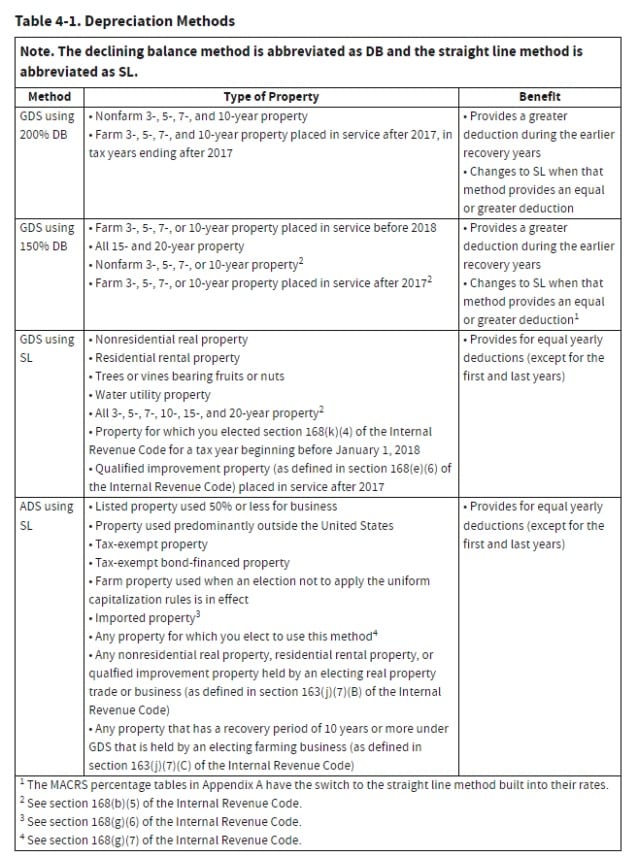
The IRS has developed a detailed system for calculating depreciation. Understanding how each step works helps you find the right ...
ASC 840 (replaced by ASC 842) ASC 840 refers to the Financial Accounting Standards Board (FASB) Accounting Standards Codification (ASC) ...
This is an article written in January, 2023 by Mike Roberts – Our Head of Strategy and Business Development Lease ...
Many businesses use some form of financing arrangement to acquire the assets they run on — vehicles, equipment, plant, property ...
Lease accounting can be an exceedingly burdensome undertaking, especially when it pertains to journal entries, financial reports, and bank reconciliations. ...
Fixed asset software is a crucial tool for businesses of all sizes. It helps companies manage and track their physical ...
The recent introduction of new leasing standards such as ASC 842 and IFRS 16 has significantly impacted private companies, requiring ...
Section 179 depreciation and bonus depreciation: Tax incentives that can benefit your business Tax regulations are subject to frequent revisions ...
Why are Profit Centres Used in Financial Reporting? Businesses of all sizes have various reasons for wanting to separate different ...
What is accumulated depreciation? Accumulated depreciation is a fundamental principle in accounting, especially in the areas of asset control and ...
Accounting Depreciation Vs Tax Depreciation for Assets Many accountants prefer to maintain a single fixed asset register for their clients’ ...
Let’s face it, reconciling fixed assets at tax time is tedious, awkward and (most of all) stressful. Let’s review the ...
In accounting, what is the definition of current assets? Current assets are company assets that we expect to convert into ...
How do you calculate diminishing value depreciation? It is important to understand how to calculate prime cost vs diminishing value ...
Here are some examples of which asset cannot be depreciated: Considering that a definition of fixed assets is: An asset ...
Making fundamental changes to fixed assets in your register In the above video, we’re going to look at all the ...
Many AssetAccountant users depreciate some or all of their assets by using a “pool” as the ATO permits. You can ...
The due date for federal income tax returns for businesses in the United States depends on the type of business ...
Setting up asset groups and GL mapping How to add asset groups and how to set them up. This is ...
Account structure for both businesses/corporations and accounting firms in AssetAccountant The account structure and AssetAccountant. There are two types of ...
User roles and permissions for using AssetAccountant User roles in AssetAccountant can be administered and managed using both the organization ...
Here at AssetAccountant, we have seen many implementations of the fixed asset depreciation software. We have received numerous inquiries regarding ...
Fixed asset lease accounting software: Overview In this video, I will show you the basic functionality AssetAccountant has for managing ...
But our ERP has a fixed assets module… We are sometimes asked the question: Why should we use a third ...
Fixed asset depreciation software: Introduction When you create a free trial account with AssetAccountant, you’ll be offered the opportunity to ...
Managing fixed assets and calculating depreciation Sounds pretty straightforward, right? You buy an asset and write it off over its ...
Getting Set Up In AssetAccountant Creating a free trial account with AssetAccountant is easy. You can either click on the ...
Managing revaluations and impairments of fixed assets One of the areas of complexity that our users come to us with ...
One-click journal postingTracking category supportDraft assets pull-through AssetAccountant works with businesses that have outgrown the native depreciation features of their ...
Tax Depreciation Incentives and Instant Asset Write-Off (IAWO) Tax Nuggets Academy has done it again. Joyce in her distinctive style ...
Fixed Asset Software For Sage Intacct AssetAccountant was approached by Sage Intacct in 2020 to be the recommended fixed assets ...
Who is ISO? ISO stands for International Organisation for Standardisation. It a non-governmental organisation formed by a network of standards ...
For years, you’ve lovingly built and curated your fixed asset depreciation spreadsheet. Complete with elegant formulas, inspired macros and beautiful ...
AssetAccountant is sophisticated fixed asset software that handles all your fixed asset depreciation and leasing needs. Australia and the Australian ...
Income Tax Assessment Act 1997 – Division 43 (Deductions for capital works) Division 43 (Div43) allows deductions for buildings and ...
The Example: Jacki Chiles is a sole proprietor manufacturing furniture and trading as Pendant Furniture. His annual turnover is $1.4m ...